
What to Write in a Workout Journal After Every Set
Record the few details that make a strength-training log useful: load, reps, effort, technique, context, and the next-session decision.
Write enough to explain the set, not enough to turn training into paperwork. A useful workout-journal entry usually needs the exercise, actual load, actual reps, effort, and one short note when something changed the result. Everything else is optional until it helps you make a better next-session decision.
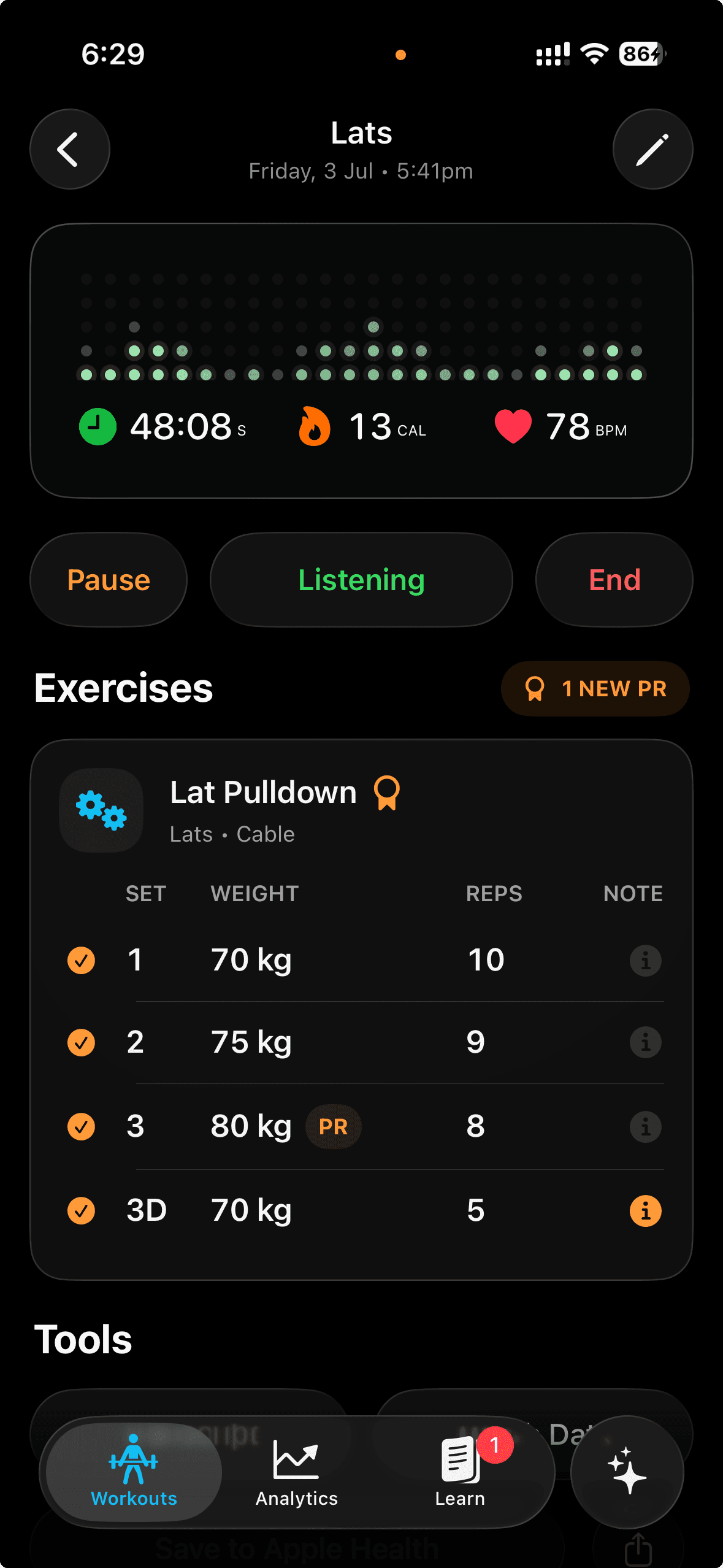
That standard is deliberately small. If you write a paragraph after every set, you will stop logging. If you only write a total workout duration, you will not know what to repeat or change. The best middle ground is a record that is fast in the gym and useful later.
Record the exercise as you actually performed it
“Row” is not always enough. If a variation, machine, grip, angle, or substitute changes what you compare next time, include it. The goal is not technical perfection in the label; it is repeatability.
Examples:
Lat pulldown — wide overhand handleChest-supported row — machineSplit squat — rear foot elevated
This helps future-you compare like with like. The same rule makes a workout log template more useful than a generic checklist.
Write actual load and actual reps
Your program may call for three sets of ten. Your journal should show what you completed: 10, 10, 8, not simply 3 × 10. The difference matters when you review progression.
For dumbbells, write whether the number is per hand if your own system could confuse it. For barbells, use a consistent convention for whether the bar is included. Consistency matters more than choosing the “perfect” format.
Add an effort marker
RPE and RIR are short ways to remember how close a set was to your limit. You can write RPE 8, 2 RIR, or plain language such as last rep slow. The goal is not to turn a subjective feeling into exact science. It is to avoid comparing a smooth set with a maximal one as if they were identical.
If you are deciding between the two scales, use the RPE versus RIR guide and choose one system to keep consistent.
Save technique cues that you want to repeat
Technique notes are useful when they are specific and short:
Controlled stretch; no jerkingPause one second at the bottomKeep ribs downGrip slipped on final rep
These are cues, not diagnoses. If a movement causes pain or you are concerned about an injury, stop and seek appropriate qualified help rather than trying to solve it with a note.
Record context that changes the comparison
Context matters when it changes performance or the next target:
- equipment was unavailable,
- rest was shorter than usual,
- the gym was unusually busy,
- you substituted a movement,
- you deliberately reduced the load.
You do not need to record every distraction. One phrase is enough: Smith machine taken; used hack squat explains why the session should not be compared line by line with the previous one.
Finish with one next-session decision
The most valuable thing you can write after a workout is the next target. Keep it concrete:
Repeat 80 kg; aim for 9 clean reps.Keep load; use longer rest.Add one rep before adding weight.Use the same handle next time.
That closes the loop between the workout journal and the next workout. It also gives an AI review system real context instead of making it invent a recommendation from totals alone. Read why workout notes matter for coaching for that distinction.
A fast spoken version
You can say these notes instead of typing them:
- “Lat pulldown, 80 for 8, controlled stretch.”
- “Same weight, 7 reps, grip slipped.”
- “Cable curl, 20 for 12, two reps left.”
Voice capture is useful because it preserves the note while the set is fresh. The voice workout logging guide explains how to keep that input quick and reviewable.
The journal does not need to contain everything. It needs to preserve the facts and context that make the next decision less of a guess.
Keep reading
More practical guides for building a workout history you can use.
RPE vs RIR: What Should You Record in Your Workout Log?
RPE and RIR are both simple effort markers. Learn the practical difference, choose one scale, and use it consistently in your strength-training log.
Read articleWorkout Log Template for Strength Training: Sets, Reps, RPE, and Notes
Use this simple strength-training workout log template to capture actual sets, reps, load, effort, context, and the next-session target.
Read articleHow to Track Progressive Overload Without a Spreadsheet
Use a simple exercise history, repeatable rep-range rules, effort notes, and a next-session target to track progressive overload without spreadsheet upkeep.
Read article