
Workout Log Template for Strength Training: Sets, Reps, RPE, and Notes
Use this simple strength-training workout log template to capture actual sets, reps, load, effort, context, and the next-session target.
A strength-training workout log template should make it obvious what to record while the set is still fresh. The useful version is short enough to keep using and detailed enough to tell you what to do next time.
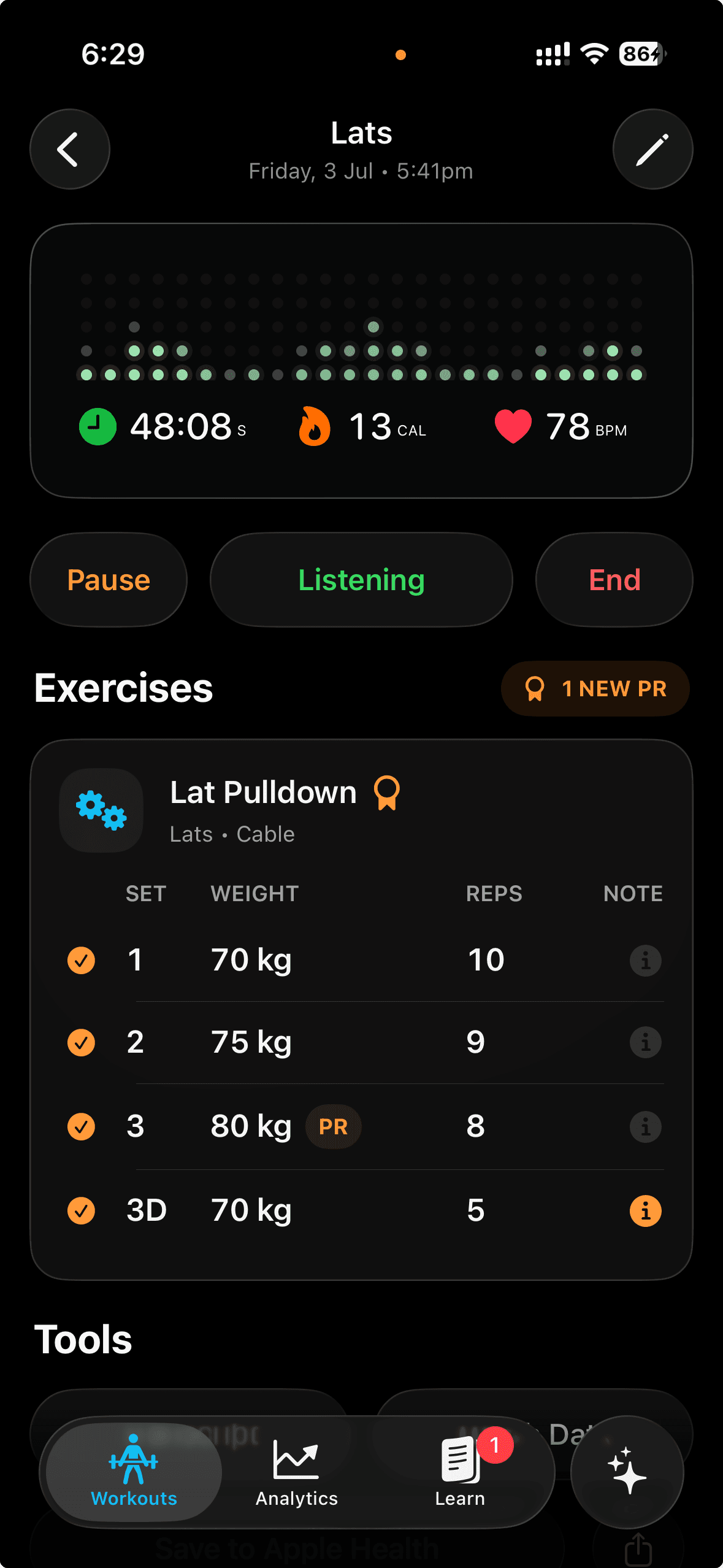
Copy this template into a notes app, paper notebook, spreadsheet, or Gyornal session. Keep the labels consistent across weeks so you can compare the same lift without decoding your own shorthand.
Copyable workout log template
Date:
Session / split:
Constraint or readiness note (optional):

Exercise / variation:
Planned target:
Working sets: load × reps
Effort: RPE or RIR
Context or technique note (only if useful):
Next-session target:
For a full session, repeat the exercise block. The essential fields are the exercise variation, actual sets, load, reps, effort, and next target. Rest, tempo, and bodyweight are optional fields: include them when they change how you interpret the result.
A completed Pull Day example
| Exercise | Working sets | Effort / note | Next target |
|---|---|---|---|
| Lat pulldown, wide handle | 70 × 10, 75 × 9, 80 × 8 | RPE 9; controlled stretch | Repeat 80 and aim for 9 clean reps |
| Chest-supported row | 32 × 10 × 3 | 2 RIR; machine setup saved | Add one rep to final set |
| Cable curl | 20 × 12 × 2 | Grip tired after rows | Keep load and use same handle |
Notice that the record is not trying to be a novel. It tells you what happened, the context that changes the comparison, and the next action.
Record warmups and working sets differently
Warmups help you prepare; working sets are normally what you compare for progression. You can list warmups briefly or omit them from the main comparison table. If a warmup reveals unusual pain, fatigue, or a need to change the plan, that context belongs in the session note.
For working sets, write the individual reps when they differ. 10, 9, 8 is more useful than 3 × 10 if you did not complete the same reps each time.
Choose one effort field
Use RPE, RIR, or a short plain-language cue. The right choice is the one you can use consistently. A number is not automatically better than “last rep slow,” but an effort note can stop you from treating every matching load-and-rep result as equal.
Read RPE versus RIR if you need a simple rule for choosing a scale. For the reason these short notes matter after capture, see why workout notes beat generic AI advice.
Keep notes specific
Good notes preserve context:
Smith machine taken; used hack squatShort rest because rack was busyGrip slipped on final repControlled stretch; no jerking
Weak notes are vague or too long to review: bad day, felt weird, or a paragraph about every set. The guide on what to write in a workout journal shows the difference.
Turn the template into a progression system
At the end of each exercise, add one next-session target. That target could be a rep, a small load increase, a repeated prescription with better execution, or a deliberate reduction. The choice should come from comparable history—not from pressure to add weight every session.
See how to track progressive overload without a spreadsheet for a simple rule-based review process. Start with the complete workout-journal guide if you need the broader capture-and-review system.
Use the template in the format that fits the gym
Paper is fine. A spreadsheet is fine when you enjoy reviewing it. A voice-first log is useful when typing is the point of failure. Gyornal lets you capture the same fields during a workout and review them later with the session history intact.
Explore Gyornal to use this template as a live workout record instead of a form you have to rebuild after training.
Keep reading
More practical guides for building a workout history you can use.
How to Keep a Workout Journal That Actually Helps You Progress
A practical strength-training journal system for recording sets, reps, effort, notes, and the next decision without turning your workout into admin.
Read articleRPE vs RIR: What Should You Record in Your Workout Log?
RPE and RIR are both simple effort markers. Learn the practical difference, choose one scale, and use it consistently in your strength-training log.
Read articleHow to Track Progressive Overload Without a Spreadsheet
Use a simple exercise history, repeatable rep-range rules, effort notes, and a next-session target to track progressive overload without spreadsheet upkeep.
Read article